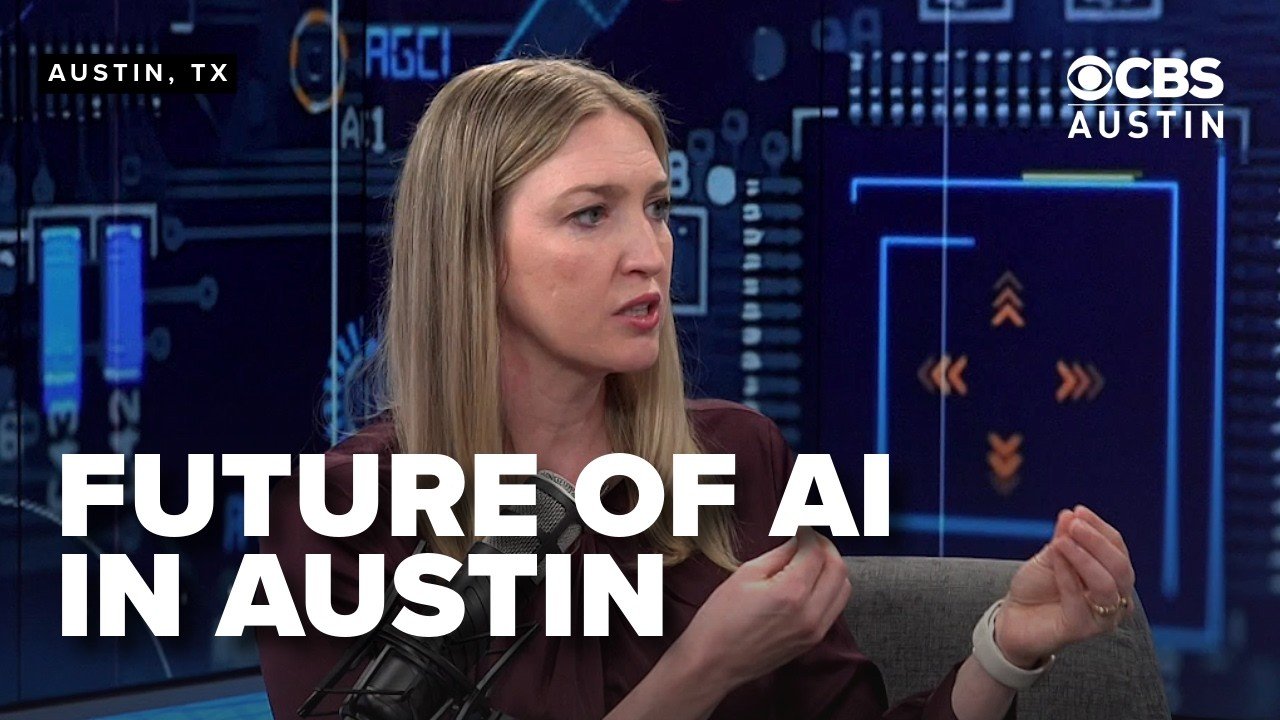
Austin’s AI scene isn’t hype anymore — it’s a real, funded, fast-moving ecosystem with its own personality: heavy on defense tech, robotics, and enterprise software, light on the consumer-app churn you see in the Bay Area. If you’re a founder thinking about relocating, a job seeker eyeing the market, or an investor trying to figure out where the money’s actually going, here’s what you need to know — no filler, just what matters.
The State of the Market Right Now
Austin startups just had their strongest fundraising quarter on record. <cite index=”1-1″>Austin startups in defense technology, autonomous vehicles, and artificial intelligence pulled in at least $4.2 billion in venture capital in Q1 2026 — the strongest quarter in the city’s history</cite>, driven by mega-rounds at companies like Saronic and Apptronik.
A few numbers that put this in context:
- AI is the single largest driver of Austin’s startup funding, accounting for roughly a third of all venture dollars raised in the city this year, ahead of healthcare tech, fintech, and robotics.
- The city now has well over 100 actively funded AI companies, ranging from three-person seed-stage teams to companies valued in the billions.
- Defense and autonomy have become Austin’s unofficial AI specialty. Saronic (autonomous maritime vessels) closed a <cite index=”5-1″>Series D of $1.75 billion in March 2026</cite>, and Apptronik (humanoid robotics) raised a <cite index=”5-1″>$520 million Series A</cite> the same quarter — both headquartered in Austin.
This matters if you’re deciding where to plant a flag: Austin isn’t trying to be a second San Francisco for consumer AI apps. It’s building a name in AI-for-hardware, AI-for-defense, and AI-for-enterprise operations — categories that are less crowded and, frankly, less prone to hype cycles.
Who’s Actually Building Here
Rather than a generic “top 10” list, here’s how the ecosystem breaks down by category, with companies that have real funding and traction behind them (not just a logo and a Twitter account).
Defense & Autonomy
This is Austin’s breakout category in 2026.
- Saronic Technologies — autonomous maritime vessels, reached a <cite index=”6-1″>$9.25 billion valuation in 2026</cite> after its latest raise.
- Apptronik — humanoid robots for warehouse and logistics work, <cite index=”6-1″>spun out of UT Austin, has raised roughly $1 billion at close to a $5 billion valuation, and counts Google DeepMind and Mercedes-Benz as partners</cite>.
- NODA AI — <cite index=”5-1″>AI orchestration software and autonomous agents for defense and intelligence operations</cite>, raised a $25M Series A in early 2026.
- Breaker — <cite index=”5-1″>AI agent software for autonomous systems control</cite>, seed-funded at $6M.
Enterprise & Vertical AI
- Jasper — one of the earlier generative-AI companies out of Austin, originally built for marketing content. <cite index=”6-1″>Raised a $125M Series A led by Insight Partners at a $1.5B valuation, now led by CEO Timothy Young, formerly president of Dropbox</cite>.
- Circuit — <cite index=”5-1″>an AI platform for manufacturing and service organizations</cite>, raised a $30M growth round.
- Knox Systems — <cite index=”5-1″>AI-managed cloud infrastructure built for FedRAMP authorization</cite>, a niche but sticky category serving government-adjacent clients.
Healthcare AI
- BrainCheck — <cite index=”5-1″>digital cognitive assessment and care tools for healthcare organizations</cite>, raised a $13M Series A.
- Several smaller vertical-SaaS AI healthcare startups have also raised seed rounds in the past year, though most stay under the radar until Series A.
Cybersecurity & Identity
- SailPoint — Austin-founded identity governance company, <cite index=”6-1″>now applying AI/ML at Fortune 500 scale for access modeling and anomaly detection</cite>.
- CrowdStrike — while headquartered nationally, <cite index=”6-1″>has a major Austin presence and has layered agentic, natural-language capability (Charlotte AI) onto its Falcon security platform</cite>.
Learning & Talent
- NextWork — <cite index=”5-1″>a project-based platform that helps people build real, portfolio-worthy AI skills</cite>, closed a $4.45M seed round in March 2026.
Austin vs. Other AI Hubs: A Real Comparison
If you’re choosing between cities, here’s how Austin stacks up against the two hubs founders most often compare it to.
| Factor | Austin | San Francisco Bay Area | New York |
|---|---|---|---|
| AI funding focus | Defense, robotics, enterprise/vertical AI | Foundation models, consumer AI, dev tools | Fintech AI, media/creative AI |
| Cost of office space | Roughly $35–40/sq ft | $60–90+/sq ft | $70–100+/sq ft |
| Talent pool depth | Strong and growing (UT Austin, relocations from CA) | Deepest bench in the world, but hyper-competitive | Strong in finance-adjacent AI talent |
| Big Tech presence | Google, Amazon, Apple, Meta, Oracle all have major offices | Native — every major lab is headquartered here | Growing, mostly satellite offices |
| State/local incentives | No state income tax, business-friendly regulation | High tax burden, stricter regulatory environment | High tax burden |
| Best fit for | Hardware+AI, defense tech, cost-conscious enterprise SaaS | Frontier model labs, consumer AI at scale | Fintech and media AI |
The honest takeaway: if you’re building a frontier foundation model, you probably still need a Bay Area presence for talent density and investor proximity. But if you’re building applied AI — something that touches hardware, defense, manufacturing, or enterprise operations — Austin’s combination of lower burn rate and deep engineering talent is a genuine structural advantage, not just a marketing line.
How to Actually Break Into the Austin AI Ecosystem
Whether you’re founding a company or looking for a role, here’s what actually works, based on how the local ecosystem operates.
1. Go where the capital already is. Austin’s most active AI investors — Next Coast Ventures, Silverton Partners, S3 Ventures, and increasingly out-of-town funds like Insight Partners and Kindred Ventures — are writing checks into seed and Series A rounds regularly. Don’t cold-email; get warm intros through Capital Factory, which functions as the de facto hub for early-stage founders in the city.
2. Target accelerators with real placement records. Techstars runs an active Austin cohort, and Y Combinator has <cite index=”7-1″>over 50 Austin-headquartered companies in its portfolio</cite>, spanning hard-tech, defense, and aerospace as well as software. If you’re pre-seed, an accelerator slot does more for your credibility in Austin than in almost any other market, because the local investor community treats them as a trust signal.
3. Lean into Austin’s actual strengths — don’t fight them. Trying to launch a consumer AI chatbot here puts you up against a thinner investor bench than you’d face in SF. Trying to launch a defense-adjacent, manufacturing, or hardware-integrated AI product puts you directly in Austin’s wheelhouse, next to companies like Saronic and Apptronik that have already proven investors will write nine- and ten-figure checks for this category.
4. Recruit from the university-to-corporate pipeline. UT Austin’s engineering and computer science programs feed directly into the local AI talent pool — Apptronik itself is a UT Austin spinout. Combine that with the steady stream of engineers relocating from Google, Amazon, Apple, and Meta’s Austin offices, and you get a hiring pool that’s deep without the bidding-war intensity of the Bay Area.
5. Budget realistically — Austin is cheap, but not free. Office space here runs roughly 40–60% below San Francisco rates, but salaries for senior AI/ML engineers have climbed close to national-market rates as competition has intensified. Don’t assume “cheaper city” means “cheaper payroll” — it mostly means cheaper overhead and burn rate, not cheaper hiring.
Common Mistakes Founders Make Here
- Assuming Austin is a discount version of Silicon Valley. It isn’t — it has its own investor culture, its own sector strengths, and its own pace. Pitches that work in SF (growth-at-all-costs, consumer-first) often land flat with Austin’s more operationally minded investor base.
- Underestimating the defense-tech gravity. A huge share of the biggest checks in Austin right now are going to dual-use and defense-adjacent AI. If your product could plausibly serve government or defense customers, it’s worth exploring — the capital is there and less contested than in pure consumer AI.
- Skipping Capital Factory. It’s not just a coworking space; it’s the connective tissue of the whole ecosystem — investors, corporate partners, and talent all pass through it regularly.
- Not accounting for the healthcare AI regulatory layer. Austin’s healthcare AI subsector is growing fast, but companies underestimate how much longer sales cycles and compliance work take compared to horizontal enterprise SaaS.
Frequently Asked Questions
Is Austin actually a top-tier AI hub, or is that overstated? It’s real, but specialized. Austin isn’t competing with San Francisco for frontier AI labs — it’s building genuine strength in applied AI: defense, robotics, healthcare operations, and enterprise verticals, backed by record-breaking quarterly funding numbers.
What’s the biggest AI company headquartered in Austin? By valuation, Saronic Technologies and Apptronik are currently the two largest AI-driven companies headquartered in the city, both reaching multibillion-dollar valuations in 2026.
Do I need to be near UT Austin to hire good AI talent? It helps, but it’s not required. Much of the senior AI/ML talent in the city has relocated from Big Tech offices already established in Austin (Google, Amazon, Apple, Meta), not just from the university pipeline.
Who: This guide was reviewed and verified by Techpks. How: It was created through hands-on research into current Austin funding data, company filings, and startup databases, and edited with AI assistance for clarity.